Redistricting, Campaign Funds, Voter Access

Background:


The right to vote is one of our most fundamental rights and enshrined forever in our Constitution. But that right can be alarmingly curtailed by external circumstances. By controlling who can vote, when they can vote, whom they can vote for, and even what can be done with campaign funds, the members of the General Assembly have the complex responsibility of regulating themselves and their own activities. Voting is fundamental to a functioning democracy, and so regulations surrounding free and fair voting should be examined with the highest scrutiny. 


Looking Back at 2019:


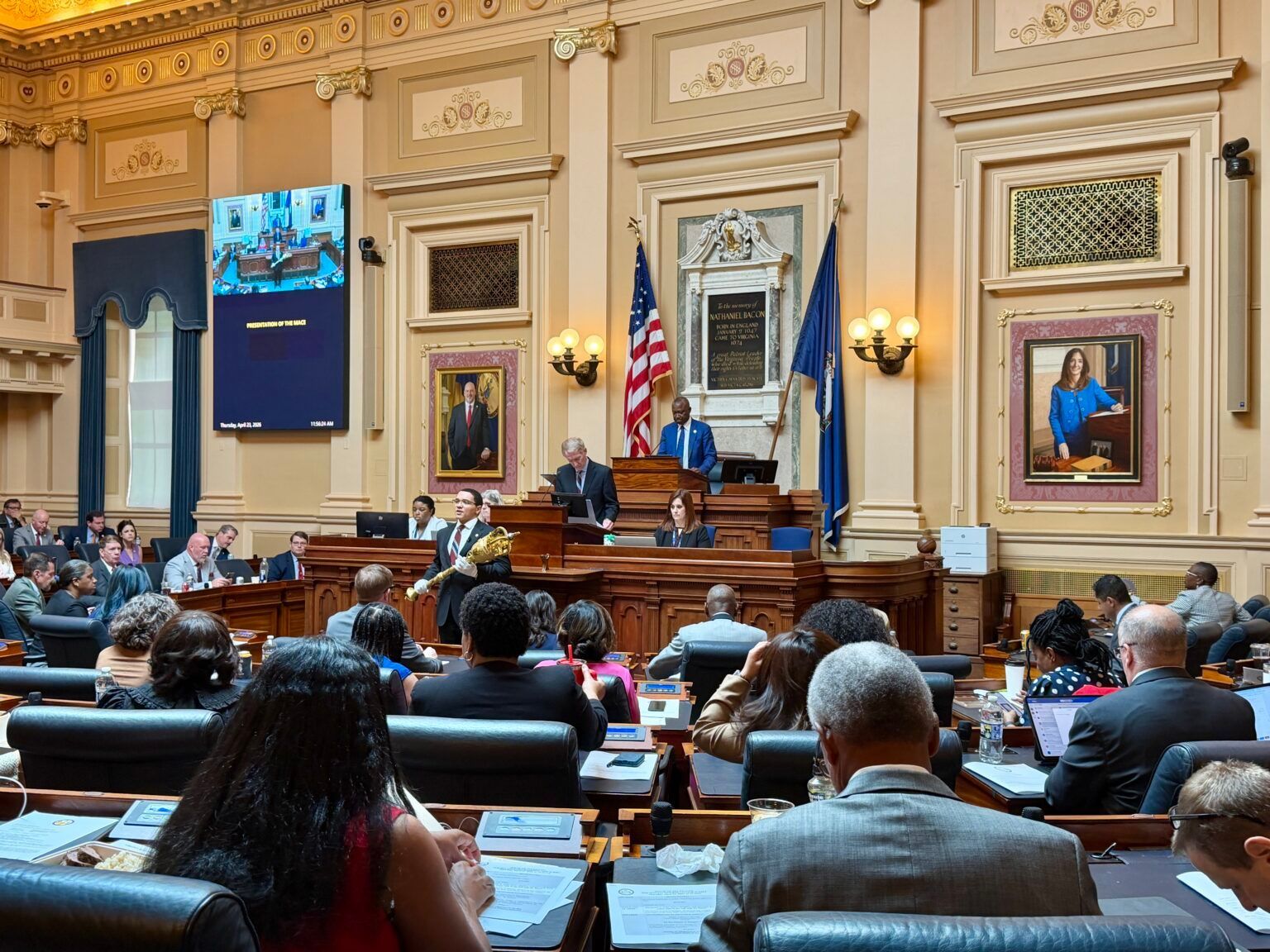
One of the biggest issues that arose in the 2019 General Assembly was redistricting reform and an attempt to create an independent commission to oversee the process moving forward. After several statewide lawsuits and an overwhelming amount of press coverage, the pressure was mounting at the General Assembly to address heavily gerrymandered voting districts in Virginia.  The Virginia constitution requires districts that are “compact” and “contiguous,” which they currently are not. A court has already invalidated these districts as unconstitutional and ordered the General Assembly to revise the boundaries based on the court’s parameters.


To address the claims of partisan and racial gerrymandering, both chambers passed legislation to create an independent 16-member commission made up of 8 citizens and 8 legislators (4 from the Senate and 4 from the House), who will draw new district lines after the 2020 census. The legislation had unanimous support in the Senate but did draw criticism from the African American caucus in the House of Delegates, who were concerned that the commission would have no African-American representation.  


Redistricting Reform


The passage of the 2019 legislation was momentous, but only the first step in a multi-year process to officially amend the state constitution. The General Assembly will have to pass the same measure in next year’s session, which will then be followed by a statewide ballot referendum for all Virginians in the fall of 2020. The legislation must pass both hurdles before being cemented into the Virginia Constitution in time for the 2020 census results. If recognized, these changes will dramatically reshape Virginia’s political map. 


Campaign Funds


Currently, in Virginia, politicians are able to use funds from campaign contributions for personal use. Despite a multi-year debate to end the practice and calls from the Commission on Integrity and Public Confidence in State Government to pass legislation, all attempts have failed. The bill from the 2019 session, which passed the House of Delegates with unanimous support, was simply left in the Senate Rules Committee, where it was never brought to a vote and simply died at the end of the session. This year there will likely be renewed support for the regulation of campaign funds and support from the public will be vital in pushing it through. 


Voting Restrictions

Virginia historically has very tight voting restrictions, despite its high voter turnout, which has led many legislators to pursue various expansions of voting opportunities. Although many pieces of legislation did not make it through the 2019 session, two bills were passed and will allow people to vote in-person, without an excuse, for a week preceding elections. Although this legislation will not go into effect until 2020, it will give Virginians far more opportunities to vote in the future. There are other ways that the legislature can make it easier for citizens to get to the polls, including mandated time off for voting, an Election Day holiday, or eased restrictions on absentee voting. 

By VOW Ops March 19, 2026
Virginia’s growing data center economy was the center of attention for this year’s General Assembly session, with lawmakers balancing the industry’s benefits against its costs to communities. Of the many bills that were proposed to regulate data centers, some passed both the House and Senate and now head to Governor Spanberger’s desk for either her signature or veto. SB 253 (Sen. Louise Lucas, D-Portsmouth) would extend a program Dominion Energy and Appalachian Power Company offer low-income customers to reduce their monthly energy bills by weatherproofing their houses. The bill also gives the State Corporation Commission (SCC) the liberty to determine if more of the cost of generating electricity for data centers should fall onto them and large manufacturers instead of homeowners. SB 553 (Sen. Srinivasan, D-Loudoun) would direct water utilities to provide monthly or quarterly reports on how much water they are providing to data centers. Currently, data centers can withhold their water usage as an industry secret. SB 94 (Sen. Roem, D-Manassas) and HB 153 (Del. Thomas, D-Prince William) would require applicants who request localities to rezone for “high-load users” to submit site assessment reports. Localities would then be able to use the information from said reports to determine if the application conforms with their zoning requirements. HB 507 (Del. McAuliff, D-Loudoun) would mandate the Department of Environmental Quality to deny air permits for data center generators after July 2026 unless they meet stricter environmental regulations. Currently, data centers are allowed limited use of backup generators that run on diesel fuel, which have resulted in next-door neighbors complaining of noxious fumes spilling into their communities. HB 323 (Del. Sullivan, D-Fairfax) directs the Department of Energy to study how to best utilize waste heat generated by data centers to meet heating demands from neighboring buildings. One of the most robust debates involving data centers revolved around the sales tax exemption given to them on their server equipment and software. The Senate budget bill would end the exemption, hoping to recover the $1.6 billion they argue the state loses annually as a result. The House budget bill would keep the exemption but stipulate additional requirements for data centers to remain in compliance with receiving the exemption. The data center industry has rebutted the proposals to end the tax exemption, arguing that it has brought billions of dollars in investment into Virginia. Furthermore, the issue does not fall along clear, partisan lines, with both Democrats and Republicans arguing for against ending the exemption. The issue has ultimately ground Virginia’s budget approval process to a halt, with neither chamber coming to a consensus on the state’s biennial budget. Governor Spanberger has called for a special session beginning April 23rd so that the General Assembly can resolve the dispute. You can read the full article here for more details.
By VOW Ops March 9, 2026
Power bills are going up in America and the people are angry. They know whom to blame—the bosses of technology firms thirsting for more juice to fuel artificial-intelligence data centres. Ashburn, a town of 45,000 in a featureless part of Virginia that has earned the nickname “Data Centre Alley”, has some 150 of these. They consume roughly as much electricity as Philadelphia, a city of 1.6m. On March 4th Donald Trump convened tech leaders to sign a pledge to “build, bring or buy their own power supply…ensuring that Americans’ electricity bills will not increase”. Their solemn pledges notwithstanding, the chief executives can do little to contain prices. That is not, though, because AI is unstoppable. It is because the AI boom is not chiefly to blame for the rising costs. In the past few years retail electricity prices have indeed outpaced overall inflation (see chart 1). And data centres are gobbling up more power. Goldman Sachs, a bank, reckons that they will account for nearly half of the overall demand growth in America in the coming years. Yet even bullish forecasts put data centres’ share of total demand at only a fifth in 2030. Today it is less than a tenth. A study last year by the Lawrence Berkeley National Laboratory showed that data-centre load was not the main cause of the rate rises in the five years to 2024. It fingered grid upgrades and rising costs of power-generating equipment and raw materials such as copper. Wood Mackenzie, a research firm, estimates that last year demand for distribution transformers outstripped supply by 10%. For power transformers the gap was 30%. Manufacturers report waiting lists for essential grid-related kit stretching to 120 weeks or more, up from 50 weeks in 2021. Many prices started going up in early 2021, nearly two years before the launch of ChatGPT ignited the AI boom. They are likely to keep rising for non-AI reasons. The Edison Electric Institute, which represents private-sector utilities, predicts its members’ cumulative capital spending will reach $1.1trn between 2025 and 2029, up from $765bn in the previous five years. More than half the sum for distribution and transmission infrastructure will go on replacing ageing equipment and hardening it against extreme weather made likelier by climate change. Between 2019 and 2023 big Californian utilities spent $27bn just on mitigating wildfire risk. These investments have been neglected for years. Now, says an industry bigwig, AI provides a pretext to help win approval from regulators to pass the cost on to consumers. And these are not the only non-AI cost pressures. Even before the war in Iran caused natural-gas prices to rise, analysts were predicting that domestic buyers would be increasingly competing with foreign ones as more export terminals for liquefied natural gas come online. Mr Trump, an inveterate renewables sceptic, has not helped by impeding the growth of solar and wind capacity. Peter Fox-Penner of the Brattle Group, a consultancy, notes that as a result prices are rising needlessly for the cheapest forms of new power generation. AI may even be lowering prices. The tech giants are already investing in their own capacity (mostly, whisper it, in the clean variety). Microsoft has signed a long-term deal to restart a nuclear reactor at Three Mile Island to supply its data centres. Meta has backed a handful of nuclear startups. In December Google’s corporate parent, Alphabet, paid $5bn for Intersect Power, a developer of utility-scale solar power and battery storage. A data centre in Ashburn belonging to Equinix, a big operator, is experimenting with fuel cells. Besides adding its own supply, big tech is making existing capacity more flexible. Google has agreed to novel tariff arrangements with Indiana Michigan Power, a midwestern utility, whereby its data centres can reduce their consumption when other demand is high. Microsoft is going further. In one of its Irish data centres it uses backup batteries as a “grid stabiliser” that can push power back into the network or draw excess power from it at times of stress. Since grids often run well below full capacity, adding a large, flexible customer can bring in lots of revenue for utilities without requiring costly expansion. This lets the utilities lower rates for households while preserving their margins. The Electric Power Research Institute, a think-tank, found that some states with high load growth between 2019 and 2024 reported price declines, after adjusting for inflation (see chart 2). The World Resources Institute, another think-tank, notes that in North Dakota rising demand from oil and gas extraction, cryptocurrency miners, data-centre operators and food-processors led to large price reductions for local electricity users. PG&E, a big Californian utility, estimates that adding a gigawatt of load could lower bills by up to 2%. If Americans want lower electricity bills, they should be shouting for more AI, not less. Original article can be found here .
By VOW Ops January 21, 2026
The second year of results from Virginia’s recently established Quality Establishment and Improvement System (VQB5) for early childhood education found that 99% of childcare providers receiving state funding meet or exceed quality expectations. As of early December 2025, over 154,000 views have been recorded on the system’s website since its October 2024 debut, revealing the many parents and families who appreciate the information that VQB5 offers them. None of these wonderful results would even be available to admire without the support and success we had in passing HB 1012 and SB 578 back in 2020! The data focuses on classroom interactions between children and caregivers and notes how said interactions encourage kids to express themselves at a young age. The state has also enacted categories of excellence for providers who score in the top 10%, exceed quality expectations, or even show significant improvement from an evaluation the year before. On top of that, a new data system called VAConnects helps integrate information on students over the years to track their learning progress. The Department of Education wishes to sustain the program and has requested $735,000 to do so. Overall, Virginia is serving as a model for other states to use in establishing best practices for their early childhood programs. Read more here .
Show More